Electricity powers nearly every aspect of modern living, but when electrical systems are outdated, overloaded, or poorly maintained, they can become dangerous. Many household electrical hazards develop quietly and go unnoticed until they cause shocks, fires, or costly damage. Understanding these risks—and knowing how to prevent them—can help keep your home safe.
1. Outdated or Aging Wiring
Older homes often contain wiring that was never designed to handle today’s electrical demands. Aging insulation can crack or deteriorate, increasing the risk of overheating and fire.
How to prevent it:
Schedule a professional electrical inspection
Replace outdated wiring with modern, code-compliant materials
Upgrade systems during renovations or remodeling
2. Overloaded Circuits
Plugging too many devices into one circuit places excessive strain on wiring and breakers. Overloaded circuits are a common cause of tripped breakers and electrical fires.
How to prevent it:
Avoid using multiple high-power devices on one circuit
Install dedicated circuits for major appliances
Upgrade the electrical panel if demand exceeds capacity
3. Faulty or Loose Electrical Connections
Loose connections create resistance, leading to heat buildup, sparks, and arcing inside outlets or panels.
How to prevent it:
Have outlets and panels checked by a licensed electrician
Replace damaged outlets and switches promptly
Avoid DIY electrical repairs that may loosen connections
4. Damaged Cords and Worn Outlets
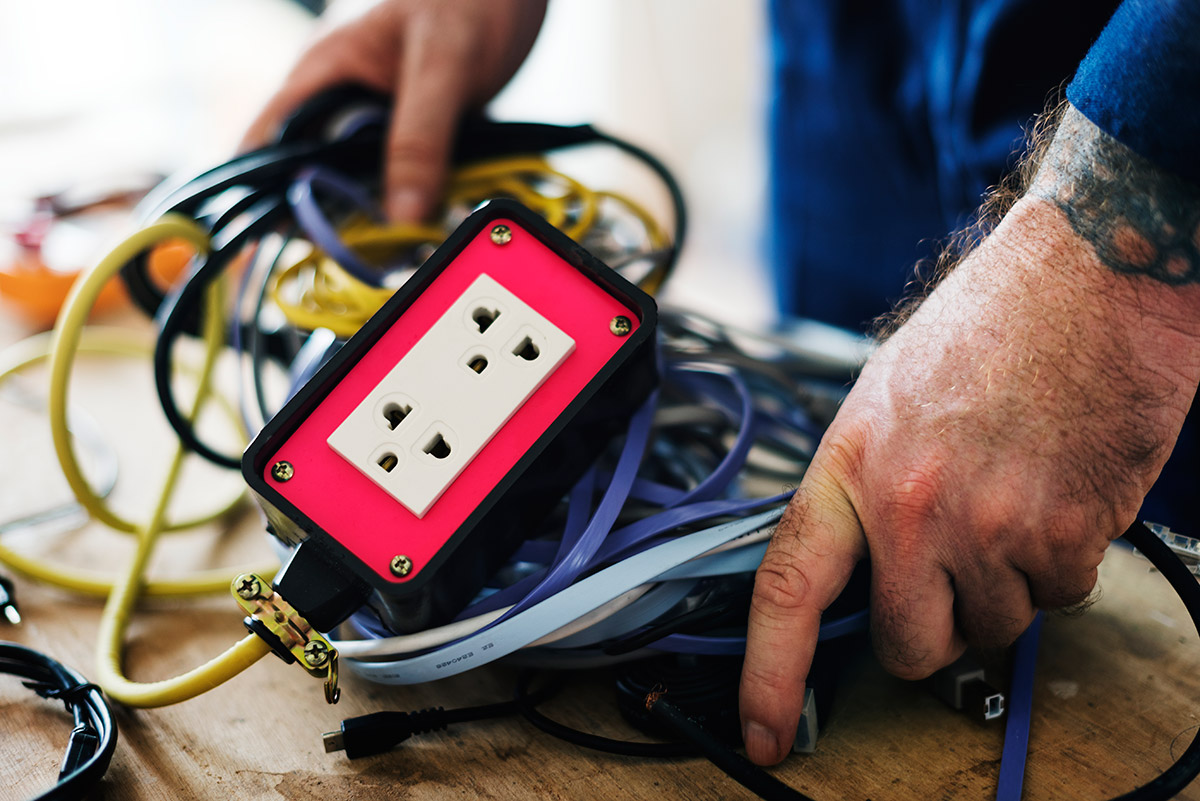
Frayed cords and loose outlets can expose live wires, increasing the risk of shock and fire.
How to prevent it:
Replace damaged cords immediately
Avoid running cords under rugs or furniture
Upgrade loose or cracked outlets
5. Lack of Ground Fault Protection (GFCIs)
Areas with moisture, such as kitchens, bathrooms, and outdoor spaces, require GFCI protection to prevent electric shock.
How to prevent it:
Install GFCI outlets in required locations
Test GFCI outlets monthly
Replace outdated outlets that lack protection
6. Missing Arc Fault Protection (AFCIs)
Arc faults can occur when wires are damaged or connections are loose, producing sparks that can ignite nearby materials.
How to prevent it:
Install AFCI breakers where required by code
Upgrade older breaker panels
Schedule inspections for early detection
7. Improper Use of Extension Cords
Extension cords are meant for temporary use, but many homes rely on them permanently, increasing fire risk.
How to prevent it:
Use extension cords only temporarily
Never overload extension cords
Install additional outlets where needed
8. Outdated Electrical Panels
Older panels may struggle to meet modern electrical needs, leading to frequent breaker trips and unsafe conditions.
How to prevent it:
Upgrade panels that are outdated or undersized
Replace recalled or obsolete panel brands
Ensure proper circuit labeling and load distribution
9. DIY or Unlicensed Electrical Work
Improper installations often fail to meet safety codes and can create hidden hazards behind walls and panels.
How to prevent it:
Hire licensed and insured electricians
Ensure permits and inspections are completed
Avoid shortcuts with electrical repairs
10. Lack of Routine Electrical Inspections
Many electrical issues remain hidden until they cause serious problems. Without regular inspections, hazards can go unnoticed for years.
How to prevent it:
Schedule periodic electrical safety inspections
Address small issues before they escalate
Keep electrical systems updated and well maintained
Why Prevention Matters
Preventing electrical hazards protects more than just your property — it protects lives. Electrical fires and shocks are often avoidable with proper care, professional service, and code-compliant upgrades.
When to Call a Professional Electrician
You should contact a licensed electrician if you notice:
Frequent breaker trips
Flickering lights
Burning smells or warm outlets
Buzzing or crackling sounds
Outlets or switches that don’t work properly
Final Thoughts
Electrical hazards are common, but they are also preventable. With professional inspections, modern upgrades, and safe electrical practices, homeowners can significantly reduce risk and improve overall safety.
Investing in professional electrical services today helps protect your home, your family, and your peace of mind.